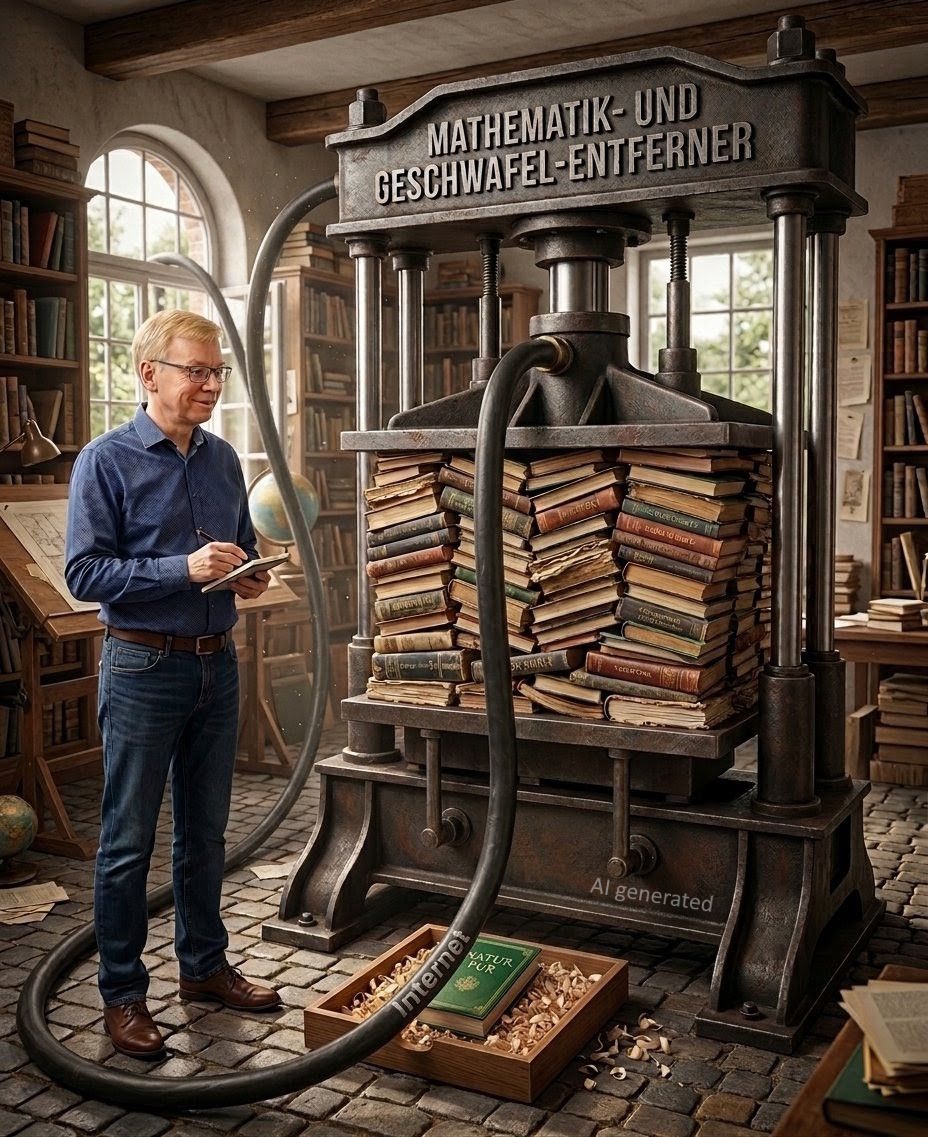
Nach diesem Motto schreibe ich meine Bücher. Ich glaube daran, dass Erkenntnisse der Wissenschaft an jedermann und jedefrau vermittelbar sind, wenn man sie nur geeignet darstellt. Dabei muss man sie auf den Kern reduzieren und ohne verschleiernde Fachsprache und Mathematik darstellen. Das ist schwierig, aber auch für den Wissenschaftler selbst sehr lehrreich.
Hier eine Aufnahme von mir bei der Arbeit. Ich entferne gerade die Mathematik und das ganze unverständliche Gerede aus einer Menge von Fachbüchern und Internetquellen. Heraus kommt die "NATUR PUR".
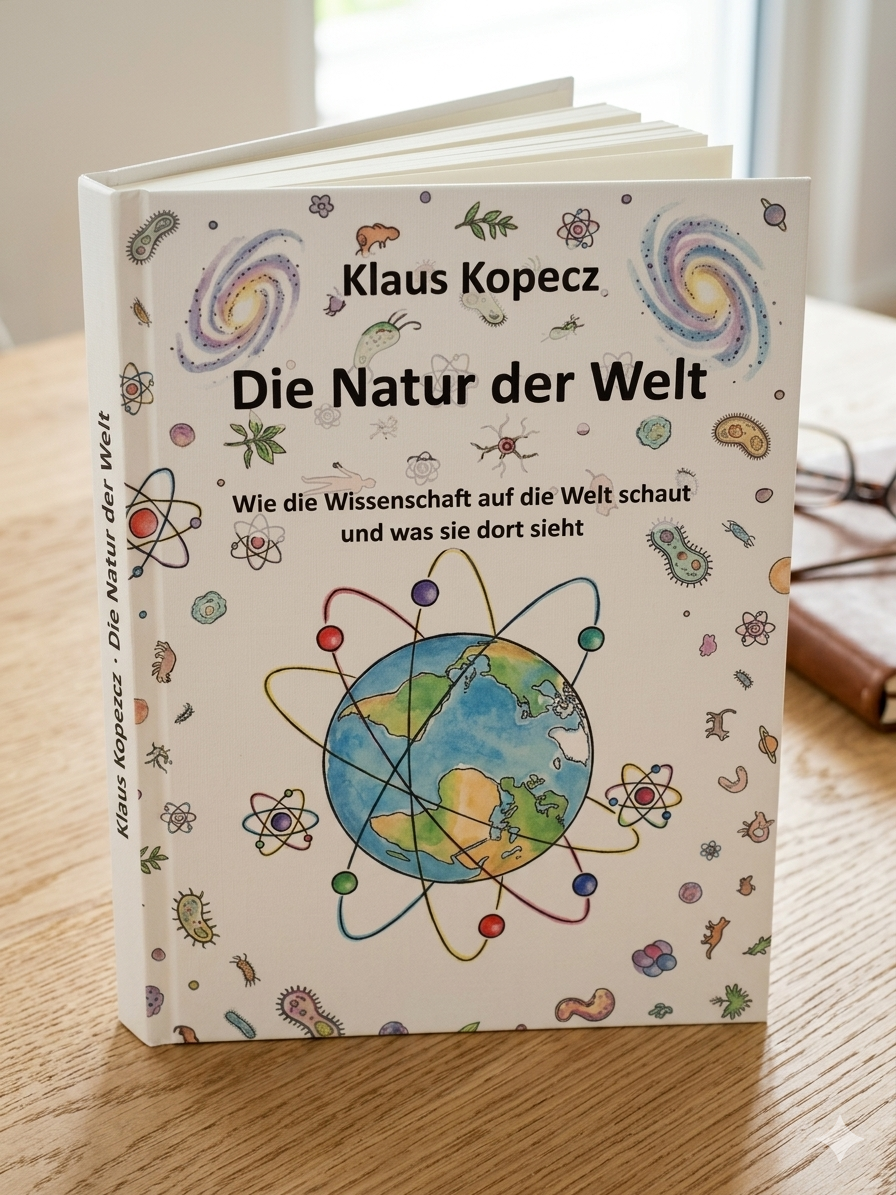
„Naturwissenschaften habe ich noch nie verstanden. Dafür bin ich zu blöd“. Wenn auch Sie unter diesem durch unser Bildungssystem geförderten Komplex leiden und wenn Sie eigentlich doch schon immer gerne mehr über die eine Welt, in der Sie leben, erfahren wollten, dann greifen Sie zu diesem Buch. Es ist ein Buch über die Natur der Natur, also das, was die Welt ausmacht, wesentlich und typisch für sie ist. Es ist auch ein Buch über eine Art und Weise, wie wir die Welt erkunden, die sich Naturwissenschaft nennt. Ohne Formeln und Mathematik und ohne Schilderung langweiliger Experimente lernen Sie sowohl die Schlüsselereignisse und Methoden der frühen und modernen Naturwissenschaften kennen als auch die damit verbundenen Personen. Es zeichnet dadurch nachvollziehbare Bilder unserer Welt aus der Vogelperspektive, die gleichzeitig einfach, komplex, unerwartet, wunderbar und respekteinflößend sind. Gehen Sie auf eine Reise in das Große und das Kleine, mit Stationen am Beginn der Welt und an deren Ende. Unterwegs stoßen Sie auf all die Grenzen, die uns die Natur bei ihrer Erkundung gesetzt hat. Um bequem zu reisen, schalten Sie den „Warum“- und den „Wofür ist das gut“-Reflex aus. Diese Fragen interessieren die Natur nicht. Am Ziel der Reise steht für Sie das große Panoramabild der Welt wie es die moderne Naturwissenschaft entworfen hat.
Deutsche Ausgabe: Erhältlich als eBook und Taschenbuch.
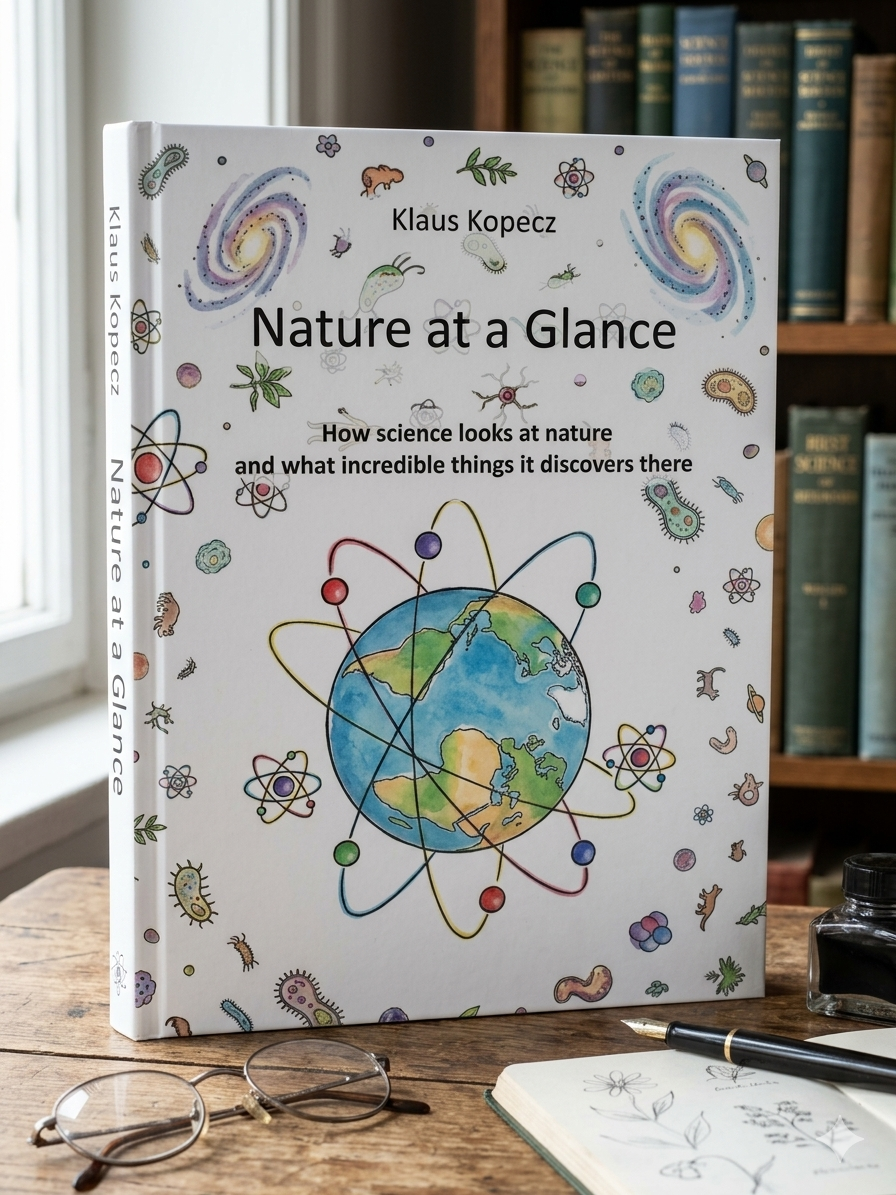
“I've never understood natural sciences. I'm too stupid for that.” If you also suffer from this complex promoted by our education system and if you have always wanted to learn more about the world you live in, then pick up this book. It is a book about the nature of nature, i.e., what makes up the world, what is essential and typical of it. It is also a book about a way of exploring the world called natural science. Without formulas, mathematics, or descriptions of boring experiments, you will learn about the key events and methods of early and modern natural science, as well as the people associated with them. It paints a comprehensible picture of our world from a bird's eye view that is at once simple, complex, unexpected, wonderful, and awe-inspiring. Embark on a journey into the big and the small, with stops at the beginning and end of the world. Along the way, you will encounter all the limits that nature has set for us in our exploration. To make your journey more comfortable, switch off your “why” and “what's that good for” reflexes. Nature is not interested in these questions. At the end of your journey, you will be rewarded with a panoramic view of the world as modern natural science has designed it.
Englische Ausgabe: Erhältlich als eBook
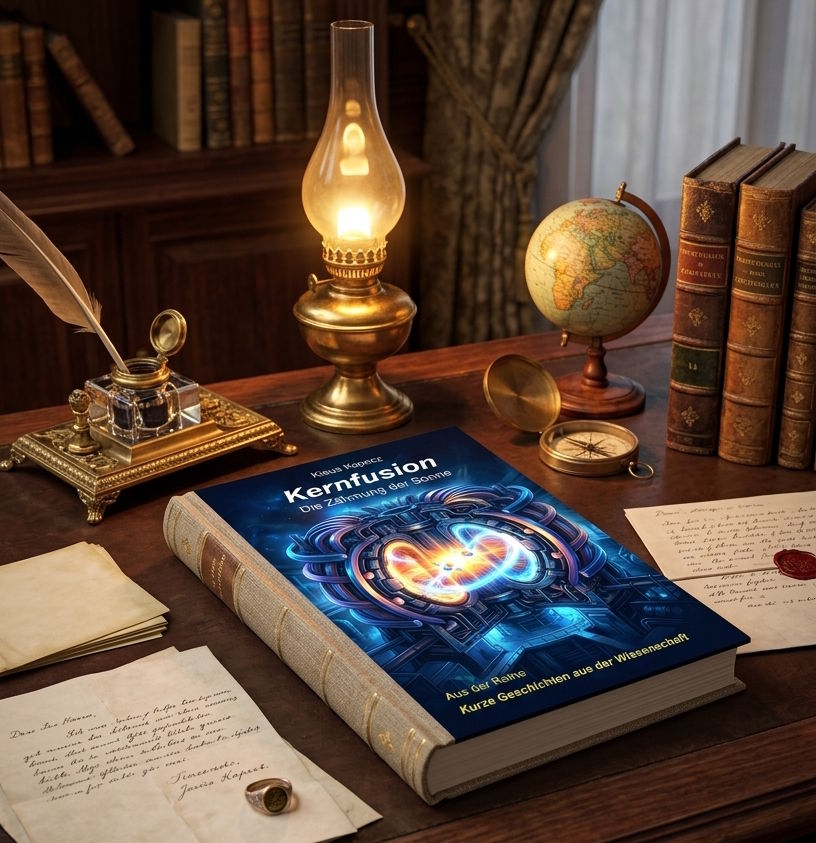
Wenn ihr in den wolkenlosen Nachthimmel schaut, könnt ihr viele tausend leuchtende Punkte sehen. Die Sterne. Wenn ihr euch bisher nie gefragt habt, warum die Sterne eigentlich leuchten, dann tut dies doch jetzt einmal. Auch tagsüber sehen wir einen Stern, den wir „Sonne“ nennen. Er sorgt für das Licht und die Wärme, die uns leben lässt. Würde morgen die Sonne erlöschen, so würde sich die Erde in kürzester Zeit in einen toten Eisplaneten verwandeln. Aber keine Angst. Die Wissenschaft sagt uns, dass unsere Sonne rund 4,6 Milliarden Jahre alt ist und noch etwa genauso lang für die Erde Wärme spenden wird. Was immer es ist, das einen Stern leuchten lässt, es muss viele Milliarden Jahre durchhalten können. Offensichtlich schafft dies kein Holz- oder Kohlefeuer. In diesem Buch löse ich das Rätsel um den Brennstoff der Sterne. Wie funktioniert diese Verbrennung und wie und warum versuchen wir Menschen, bisher erfolglos, die Sonnenkraft auf der Erde zu zähmen? Ich erzähle euch von einigen Grundlagen der Kernphysik, aber auch die über hundert Jahre andauernde Geschichte des Verständnisses und der Nutzbarmachung der Kernfusion. Dieses Thema betrifft uns alle durch die aktuelle Notwendigkeit unsere Energiepolitik neu zu gestalten. Ihr benötigt keine Vorkenntnisse und ihr müsst auch kein Mathefreak sein, um zu diesem Thema in Zukunft qualifiziert mitreden zu können. In diesem Buch erhaltet ihr Antworten auf die Fragen:
- Was ist ein Atomkern und wie wurde er entdeckt?
- Was ist Kernfusion und wie wurde sie entdeckt?
- Warum liefern sowohl Kernspaltung als auch Kernfusion Energie?
- Wie funktioniert eine Wasserstoffbombe?
- Warum wollen wir einen Fusionsreaktor bauen? Welche erfolgversprechenden Ansätze gibt es dafür?
- Wo stehen wir heute und wann werden Fusionsreaktoren als Stromlieferanten verfügbar sein? Wird ein Fusionsreaktor jemals wirtschaftlich zu betreiben sein?
Deutsche Ausgabe: Erhältlich als eBook.
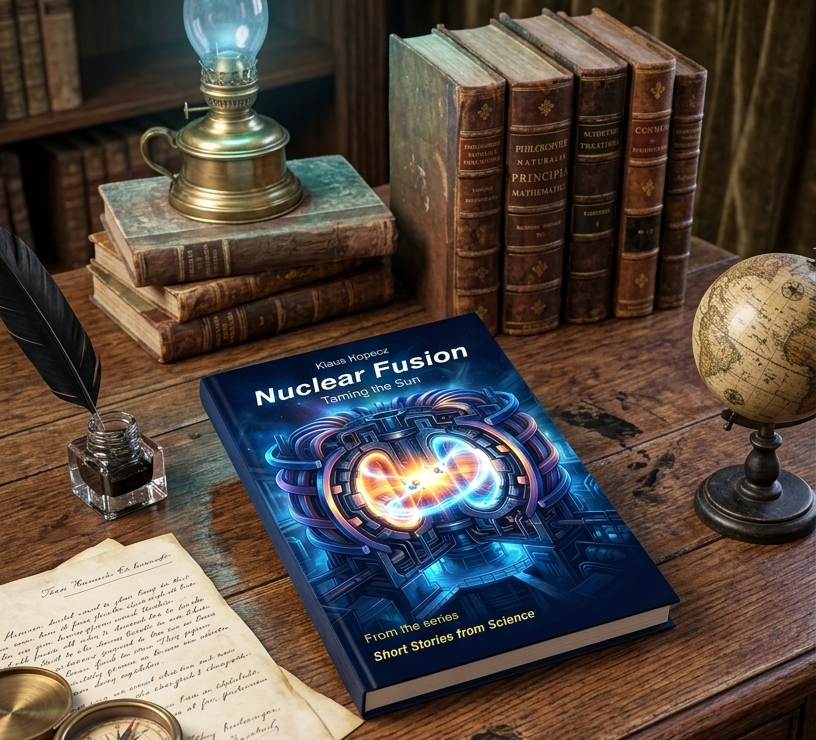
When you look up at the cloudless night sky, you can see many thousands of shining points. The stars. If you’ve never wondered why the stars actually shine, now is the time to do so. Even during the day, we see a star that we call the “Sun.” It provides the light and heat that sustain our lives. If the Sun were to go out tomorrow, the Earth would turn into a dead, icy planet in no time. But don’t worry. Science tells us that our Sun is about 4.6 billion years old and will continue to provide heat for the Earth for roughly the same amount of time. Whatever it is that makes a star shine, it must be able to last for many billions of years. Obviously, neither a wood fire nor a coal fire can do this. In this book, I unravel the mystery of the stars’ fuel. How does this combustion work, and how and why have we humans, so far unsuccessfully, tried to harness the sun’s power on Earth? I’ll tell you about some of the fundamentals of nuclear physics, as well as the more than 100-year history of understanding and harnessing nuclear fusion. This topic affects us all given the current need to reshape our energy policy. You don’t need any prior knowledge, and you don’t have to be a math whiz to be able to discuss this topic knowledgeably in the future. In this book, you’ll find answers to the following questions:
- What is an atomic nucleus, and how was it discovered?
- What is nuclear fusion, and how was it discovered?
- Why do both nuclear fission and nuclear fusion produce energy?
- How does a hydrogen bomb work?
- Why do we want to build a fusion reactor? What promising approaches are there for this?
- Where do we stand today, and when will fusion reactors be available as sources of electricity? Will a fusion reactor ever be economically viable to operate?
Englische Ausgabe: Erhältlich als eBook
AI Website Builder